Into the Depths of Marrakech
- Janelly V.

- May 14, 2025
- 3 min read
After two long days of travel, it was finally time to immerse ourselves in the city of Marrakech. Once I finished getting dressed, I headed down the stairs to have breakfast, ensuring I was properly fueled for our long day of activities.
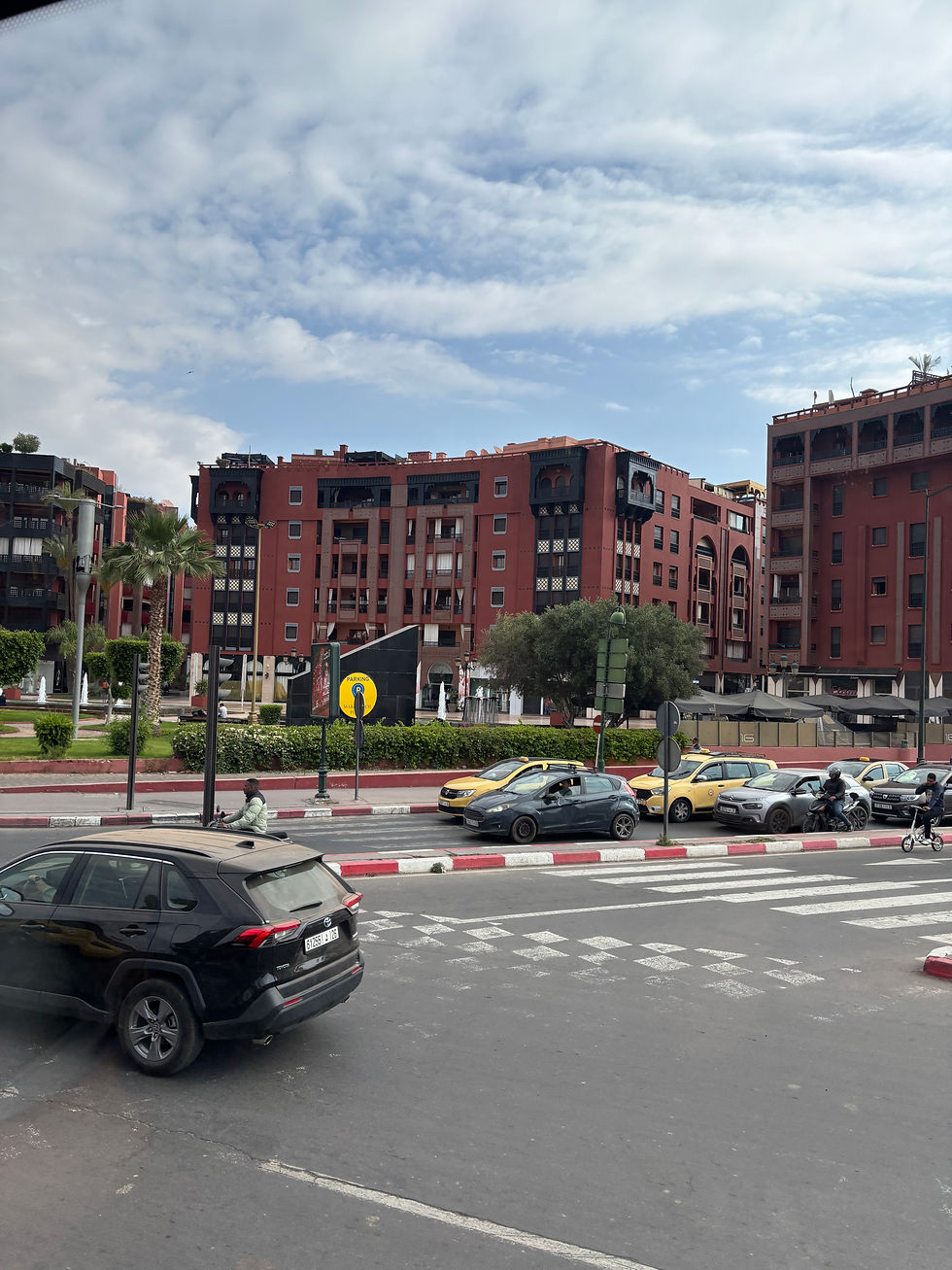
By the time I finished breakfast, it was time to leave for the bus for our city tour of Marrakech. To reach the bus, we had to navigate through a sea of cars. The intersection lacked traffic lights and signs to indicate when motorized vehicles should stop for pedestrians. It was up to us to take the initiative to find an opportunity to cross. Thankfully, we had our ISA representative with us to help us understand the rules of the Moroccan road. As we crossed as a group, we were momentarily halted, standing in the center of the road, completely surrounded by motorized vehicles weaving around each other. In that moment, it was frightening, yet I felt surprisingly safe amidst the natural flow of traffic in Morocco.
Once we boarded the bus, our city tour commenced. Our tour guide informed us about the various cultural influences on Moroccan architecture. He emphasized the division of the walls: the exterior of the palace walls represented the New City, primarily influenced by French colonizers, while the interior was shaped by Moroccan culture and Jewish settlers. The tour guide highlighted the structure of some of the buildings we passed. The shops were located on the first floor, while the residences occupied the second floor, a style that was distinctly Jewish.
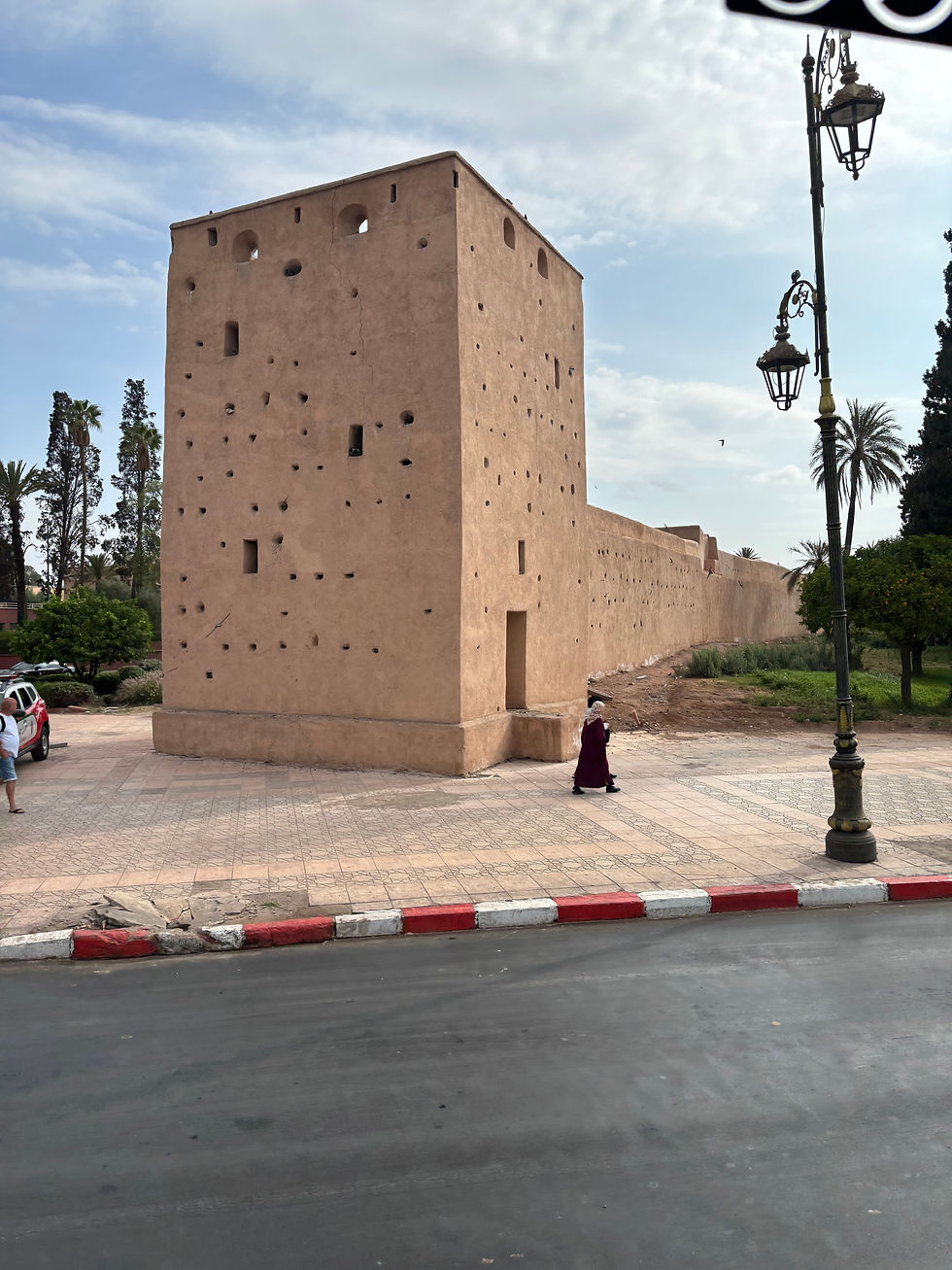
We soon arrived at Bahia Place. The moment we began to explore, each corner we turned, and every wall had elaborate designs. The further we explored, after every twist and turn, the designs became more astonishing. Each design was evident of the amount of dedication and skill the artists had. I was left in complete awe as I could not begin to imagine the amount of dedication and creativity behind the architecture of the buildings.


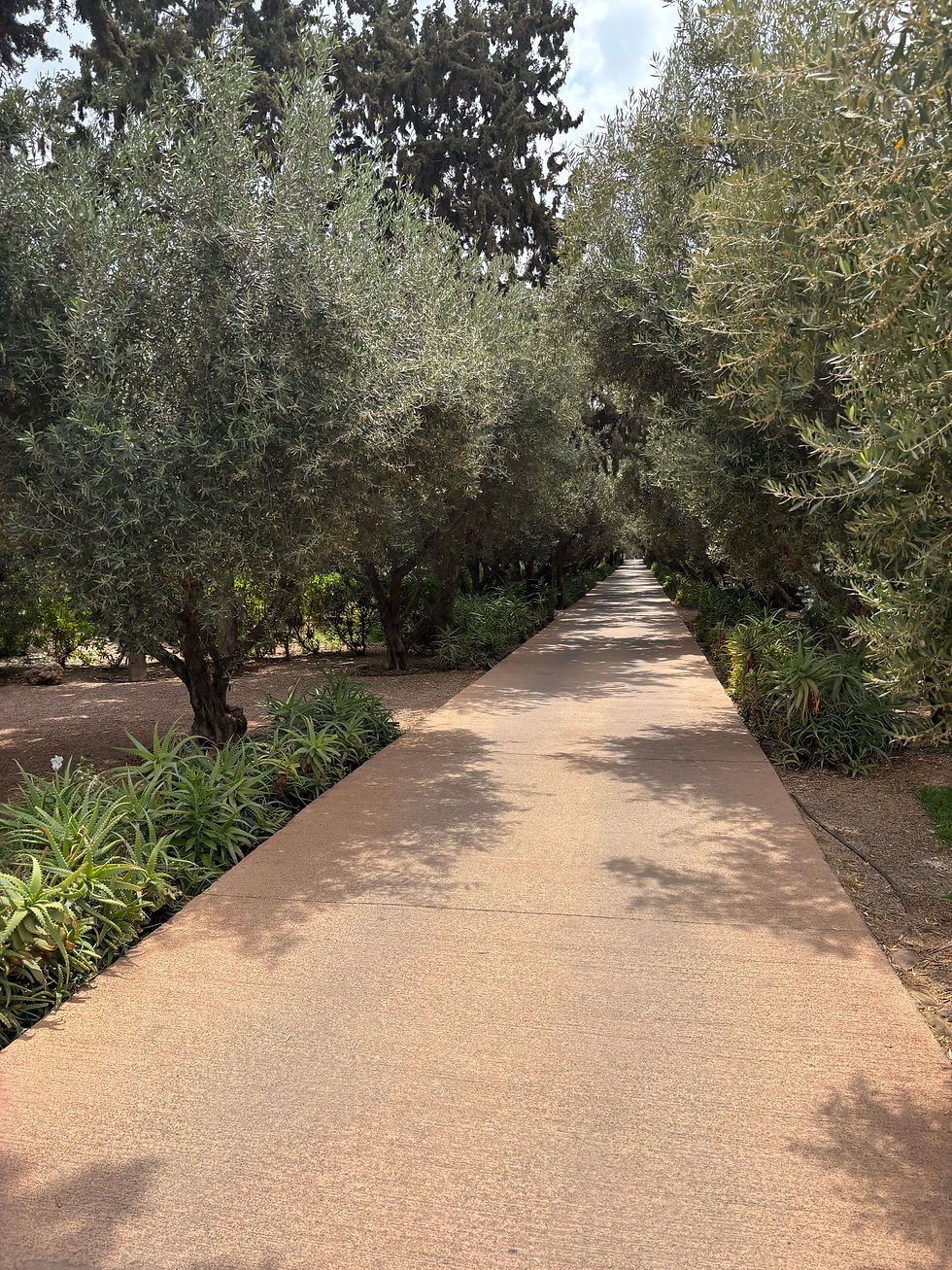
After three hours of our tour, we had to depart to our first business site visit. I was completely clueless, as I was about to be introduced to a breathtaking landscape that seemed to have emerged from the pages of a fantasy novel. We arrived at the driveway of The Oberoi Marrakech, a family-owned luxury hotel company. A staff member warmly welcomed us and guided us through the vast halls of the hotel and the orchard, which consists of 3,500 olive trees. The sounds of rushing water, the chirping of birds, and the endless pathways of lush greenery created an atmosphere that felt like paradise.

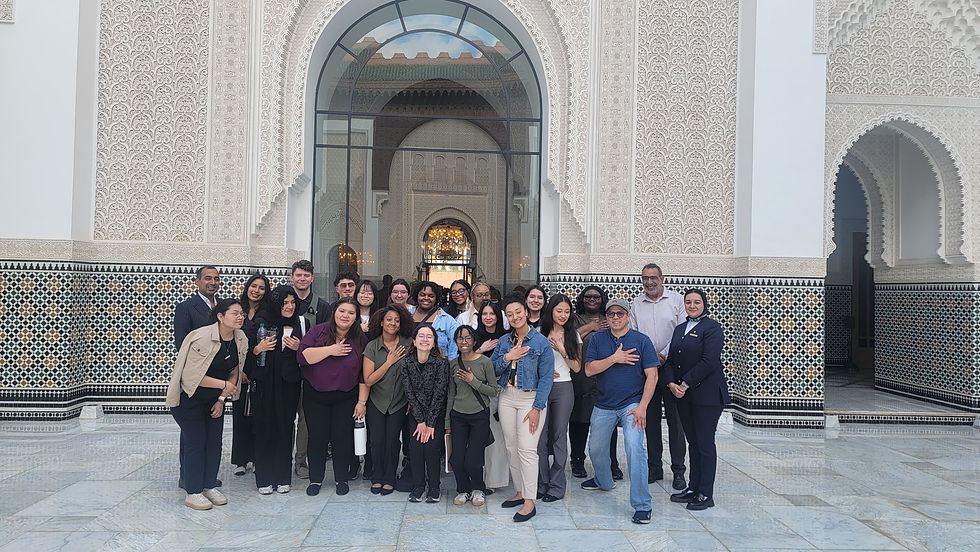
We were not only there to admire the beauty of the resort; we also aimed to learn about its origins and understand the various roles essential for ensuring its success. Seated in front of us was a small panel consisting of a manager, a chief engineer, and a human resources director. They provided us with a broader perspective on how various majors can be implemented simultaneously in one industry.
One aspect that fascinated me during the chief engineer’s speech was his emphasis on the fact that the land was originally an olive tree farm. During the planning phase of the construction, there was a strong desire to preserve the olive trees. Before construction commenced, the trees were temporarily relocated. The construction plan incorporated a strategy to integrate the olive trees into the design of the resort. The harvested olives would be used to meet the hotel's needs.

I look forward to learning more about the culture, jobs, and people of Morocco throughout our stay!
Signing Off...
Janelly Villalobos


Comments