Journey to the White City
- Ashley Young
- May 18, 2025
- 3 min read

Casablanca: one of the largest and most famous cities in Morocco, whose reputation precedes itself. It is the economic hub of the country, and is a city whose rich history is reflected in its diverse population, as well as its architecture. This weekend, the other Horizons’ scholars and I were very excited to get a chance to visit!
On the day of our departure, my roommates and I awoke to the aroma of a delicious breakfast cooked by our home stay mother. We had to depart rather early, as Casablanca is almost 4 hours away from Meknes, so our conversation was limited. However, we were still able to express our appreciation for her before we left.
Admiring the rolling mountains and sprawling deserts of Morocco made the bus ride pass by in the blink of an eye. Four hours later, we arrived at our first stop on our journey: The Hassan II Mosque. Immediately upon arrival, I noticed the beautiful minaret that stood tall above everything else. The women in our group (including me) covered our hair before we went inside.


Entering the mosque was like stepping into a different world - the intricate patterns adorning the beautiful cedar wood, stucco, and marble that covered the entirety of the massive prayer hall were mesmerizing - I felt that it would be impossible to take everything in, even if I’d looked for a hundred years. After marveling at the talent of Moroccan artisans, I began to wonder what kind of materials and techniques were used to build this structure. Luckily, my questions were answered by our (wonderfully snarky) tour guide. Here are a few facts about the mosque: it is the tenth largest mosque in the world, most of the doors are made of titanium (since it doesn’t oxidize), and that it was built in only seven years! In addition to the engineering details, we were able to learn a lot about the religious significance of certain aspects of the mosque’s design. For example, in the prayer room, the purpose of the window into the ablution room is to give those in it contact with all four elements: water, earth, fire, and - from the opening of the roof - air. The level of thought put into every detail of the mosque made me admire more than just the talent of the Moroccan people, but also their love - for their work, for their people, and for God.

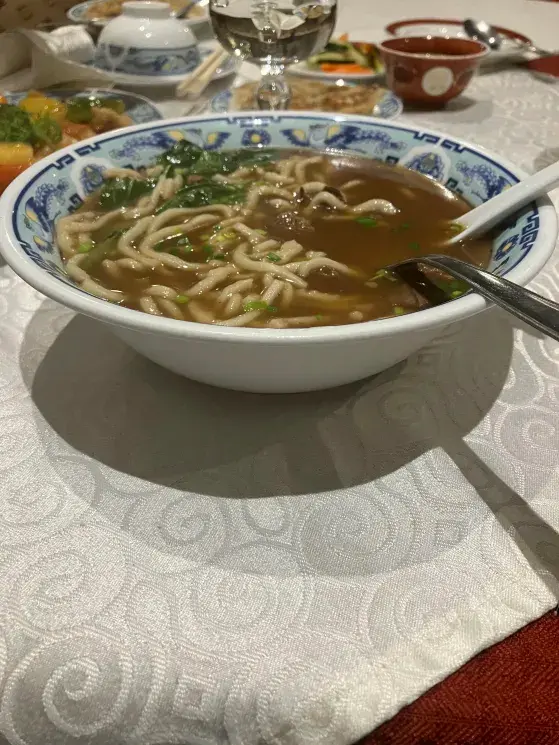
After visiting the mosque, we toured Casablanca as a whole. The four quarters of the city all have unique characteristics that make them distinct. The oldest part of the city, which bears the name given to Casablanca by the Berbers - Anfa, is the residential quarter, and at the highest elevation in the city. There is also the European quarter, which is characterized by Art Deco style architecture, the Habous - or government-owned - quarter, and the “new” quarter - which was built after Morocco gained independence. After the tour, I relaxed until I went to eat some delicious food at the restaurant “Golden China” with some friends. I’m genuinely a bit disappointed that the restaurant is not open on Sundays. But perhaps that’s a good thing, as I would’ve easily spent every last dirham there if given the opportunity.
The first day in Casablanca has already been rich with experiences, and I can’t wait to learn more!
Signing off,
Ashley Y.


Comments